

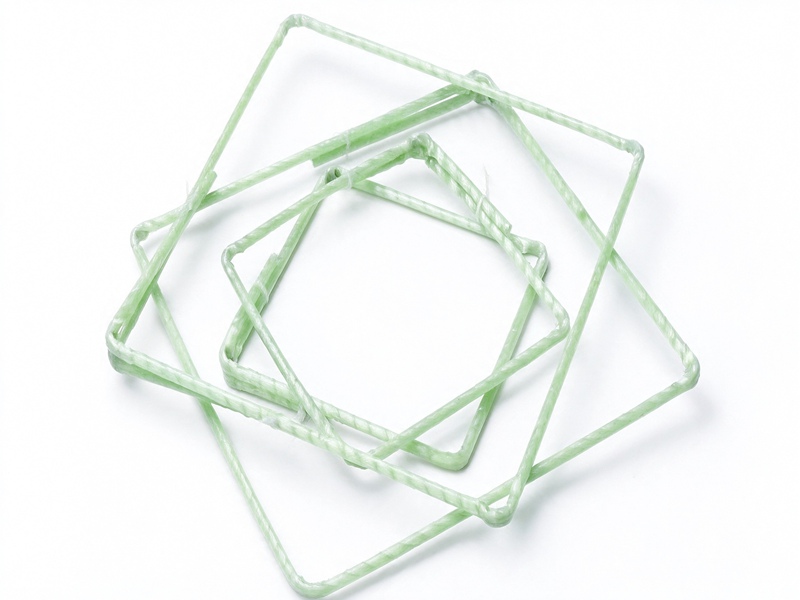
Fiberglass Rebar
Fiberglass rebar (GFRP rebar) pultruded from alkali-free fiberglass and epoxy resin. Light, strong and corrosion resistant for concrete and bridge work....
Product Overview
Fiberglass rebar, also known as GFRP rebar, is a composite reinforcement pultruded from alkali-free fiberglass and an epoxy or vinyl ester resin matrix. Compared with ordinary steel rebar it is light, strong, corrosion resistant and fatigue resistant, which is why it is widely used in building, bridge and tunnel engineering. The company produces a full range of sizes with custom diameters and lengths to suit each project, and the specially treated surface gives good bond with concrete.
Fiberglass rebar is made on automated pultrusion lines where fiber content and resin ratio are stable and controllable, giving a smooth surface and a uniform cross-section. Tensile strength, modulus of elasticity and other properties are tested before dispatch; the product meets the relevant standards and suits a range of project environments.
Technical Specifications and Performance
Fiberglass rebar has a density of about one quarter that of steel and a tensile strength of 600-1000MPa. It resists corrosion well, does not rust in acid, alkali or salt environments, and has a long service life. Its low thermal conductivity and good electrical insulation also suit special structural locations that have electromagnetic requirements.
The main sizes range from 6 mm to 32 mm in diameter, and lengths are cut to project requirements. The surface can be produced with a threaded or ribbed profile to improve anchorage in concrete. Black, green and other colours are available so that different sizes can be told apart on site.
Production Process and Quality Control
Fiberglass rebar is produced by continuous pultrusion: glass fiber rovings are arranged and impregnated with resin, cured in a heated die, then pulled and cut to length. Fiber tension, resin wet-out and curing temperature are tightly controlled throughout the process so that properties stay consistent.
The company maintains a complete inspection system: every batch is checked visually, measured and sampled for mechanical properties. Key tests cover tensile strength, modulus of elasticity, density and surface quality, and material is released only after passing inspection, with a certificate of conformity supplied with the goods.
Applications
Fiberglass rebar is widely used in building structures, slope support, bridge deck paving, tunnel lining and marine concrete, as well as in mine support, retaining walls and temporary structures. In corrosive environments it can replace steel rebar, greatly extending the service life of the structure and reducing maintenance costs.
For further product information or help with size selection, please contact the company; we will provide technical advice and supporting service based on the actual conditions of the project.