

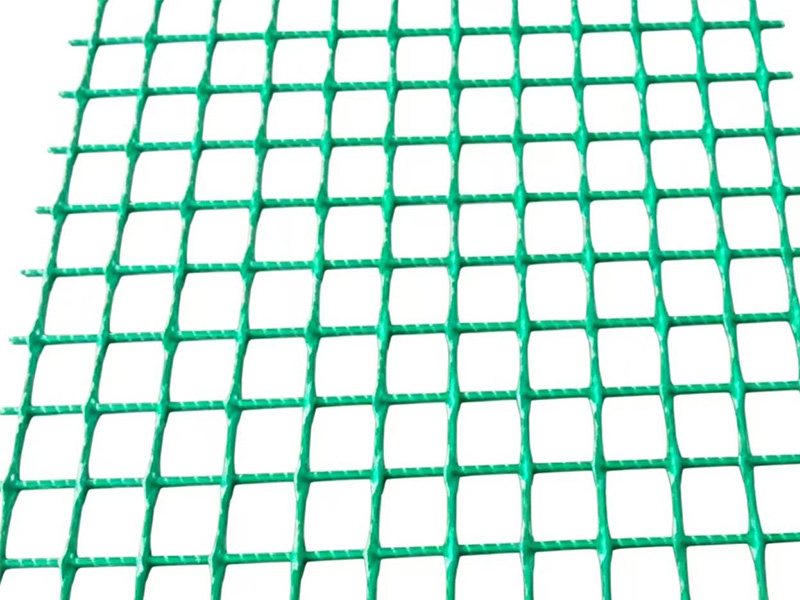
Fiberglass Rebar Mesh
Grid panels of GFRP rebar for concrete reinforcement, light, corrosion resistant and non-conductive, used in slabs, bridge decks, tunnels and retaining walls....
Product Overview
Fiberglass rebar mesh is a grid-shaped reinforcement material made from FRP composite bars arranged in the longitudinal and transverse directions and fixed by tying or composite forming. The bars are evenly spaced in both directions, and mesh size and bar diameter can be set to project requirements. It replaces conventional steel mesh and carries tensile load and controls cracking in concrete structures. The mesh is light, strong, corrosion resistant and non-conductive, and it suits structural strengthening and reinforcement work in many types of project.
Structure and Specifications
The mesh is formed from longitudinal and transverse bars crossing each other, fixed at the intersections by tying, winding or forming so that the grid stays square with even spacing. Openings are usually square or rectangular, and bar diameter, grid spacing and panel size can be selected to the design; surface coating or resin system can be chosen for the service environment to improve weather resistance and bond. Final specifications are confirmed against project drawings and design parameters.
Performance Characteristics
Fiberglass bars have high tensile strength and low self-weight, which makes transport and site laying easier. The material is corrosion resistant and performs better than ordinary steel in damp, acid, alkaline and rust-prone conditions. It does not conduct electricity and causes no electromagnetic shielding problems, so it suits power and protection applications where conductivity matters. The coefficient of thermal expansion is close to that of concrete, so the mesh deforms with the base material and the risk of cracking from thermal stress is reduced.
Application Scenarios
The mesh can be used for concrete reinforcement in floor slabs, ground floors, bridge deck overlays, tunnel linings, retaining walls, slope protection and pavement strengthening, and also for repair and strengthening of structures in corrosive conditions. In municipal, transport, water and chemical construction, fiberglass rebar mesh is often used as an alternative to steel mesh, improving durability over long service in the working environment.
Selection and Use
Mesh specification is set from structural loading, reinforcement ratio, grid spacing, bar diameter and concrete cover; during laying the bars should be kept straight, the intersections firmly fixed, spacing set to the design and connections made reliably to adjacent members. Bars should be protected from heavy impact or bending damage on site, and cutting and fixing should follow the relevant work procedure.
FAQ and Usage Notes
Before ordering, provide the structural location, load requirements, mesh size and quantity so that bar specification and grid parameters can be matched. On delivery, check bar appearance, diameter and grid spacing, and avoid mixing the mesh with other materials. Store in dry conditions away from prolonged sun exposure and crushing, and protect the mesh against movement during laying and casting.
In practice the mesh can be used with matching bars and connectors to form a complete composite reinforcement system; the manufacturer can advise on specification selection and laying for the project conditions, helping the contractor control reinforcement layout and material consumption.