

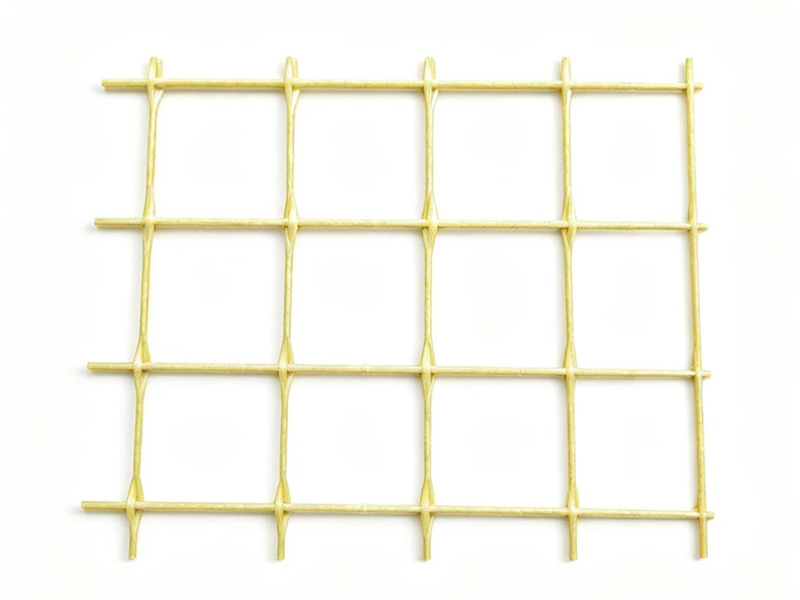
Fiberglass Rebar Mesh Panel
Fiberglass rebar mesh panels formed from pultruded GFRP bars, a light, non-conductive alternative to steel mesh for slabs, tunnels and repair work....
Product Overview
Fiberglass rebar mesh is a grid panel made from glass-fibre composite bars crossing in two directions. The bars are pultruded and then arranged and fixed at the design spacing to form a reinforcement mesh that can be laid directly. The mesh provides crack control and tensile reinforcement in concrete members and structural layers, and it can replace steel mesh in corrosive, electrically sensitive or lightweight structures.
Forming Method
In production the composite bars are first cut to length and arranged in the longitudinal and transverse directions, then fixed at the intersections so that the grid is square with consistent spacing. A protective layer can be formed on the bar surface where required to improve the bond with concrete. Panel size, bar diameter and grid specification can be combined to suit the drawing, so different members can be reinforced as required.
Compared with Steel Mesh
Compared with ordinary steel mesh, fiberglass rebar mesh is considerably lighter, so handling and laying take less effort. It does not rust in acid, alkaline or damp conditions, so durability is better. The material is non-conductive, so there is no electrochemical corrosion and no electromagnetic interference. Tensile strength is high, so the reinforcement layout can be optimised while meeting the design. Final selection is confirmed against structural calculation and project standards.
Applications
The mesh suits crack-control reinforcement in floors and pavements, strengthening of bridge and tunnel structures, slope and retaining wall grids, anti-corrosion chemical structures, structures around power facilities and repair of ageing members. In projects exposed to corrosive media over long periods, or where weight and conductivity are special concerns, fiberglass rebar mesh is the more suitable option on overall performance.
Customization and Supply
Bar diameter, grid spacing, panel size and packing method can be customized to product drawings, structural location and reinforcement requirements, and specification details and application advice are supplied with the order. After delivery, questions on laying, fixing and joint treatment can be discussed with the manufacturer against the site conditions.
FAQ and Usage Notes
Before use, check that the mesh specification matches the design drawing, and make sure the longitudinal and transverse bars are correctly positioned and the intersections firmly fixed during laying. When placing concrete, keep the poker away from direct contact with the bars so that the mesh does not shift and the bars are not damaged. Store under cover away from damp and direct sun, stacked by size for easy handling and later inspection.
Beyond standard grid sizes, bar layout, panel dimensions and packing can be combined to suit the project, and for strengthening and refurbishment work the extent of the mesh and the fixing method can be set from the condition of the existing member. With proper installation and storage, bar performance and mesh integrity are maintained over long service, extending the working life of the reinforced member.