

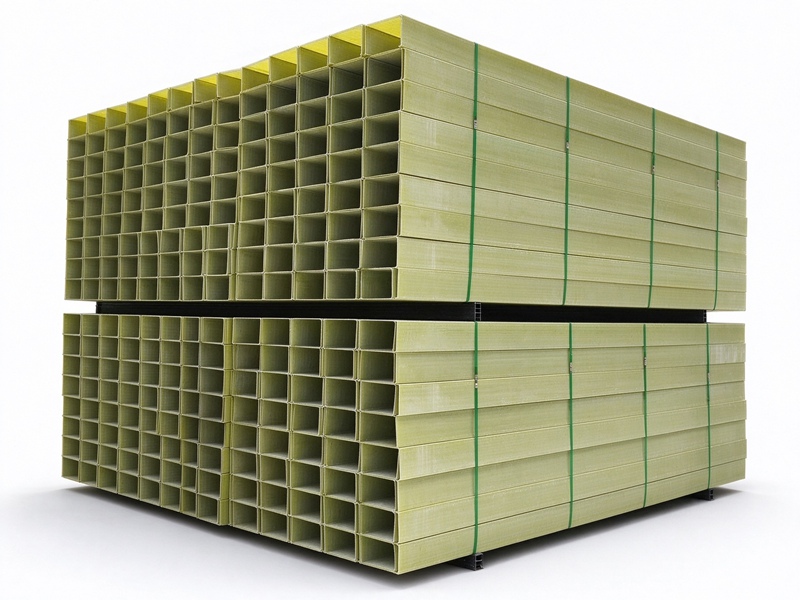
FRP Cable Tray
Pultruded and molded FRP cable tray in channel, ladder and tray types, corrosion resistant and electrically insulating for chemical plants and coastal sites....
Product Overview
FRP cable tray is a cable support system made from glass-fibre reinforced plastic, combining corrosion resistance, light weight, high strength and electrical insulation with the job of supporting and protecting cable runs. The tray does not rust during long service in damp, acid, alkaline and salt-spray conditions, which makes it suitable for chemical plants, wastewater treatment plants and coastal areas. Service life is extended and maintenance cost is reduced, and the trays are supplied with covers and connecting pieces for straightforward installation in cable laying projects.
FRP cable tray is formed by pultrusion or compression molding, which gives high overall strength and stable dimensions, and the common types are channel (trough), ladder and tray. The material insulates well, does not conduct and is non-magnetic, so electrical safety is high and the tray suits locations with electromagnetic requirements. Because the tray is light, installation is easy and the load placed on brackets and building structures is reduced. Flame-retardant grades are available to meet fire protection requirements, and the range of sizes covers most project needs.
Technical Specifications
Common widths and heights cover normal cable laying requirements, and standard unit lengths can be adjusted to project dimensions. Different performance grades are available, including flame-retardant and corrosion-resistant versions; the colour is usually grey and the surface is smooth. Load capacity depends on the size of the tray and the spacing of the supports, so the tray should be selected from the cable weight and the bracket layout. Covers and brackets can be supplied as options so that the tray system is complete for installation.
By structure the range is divided into channel, ladder and tray types, with covers, connectors and bracket accessories supplied to match. Dimensions are accurate and the surface is smooth, so the tray can be cut and adjusted on site. Resin content and process quality affect performance, and buyers should check surface quality and the manufacturer's test data. Marking is clear, which helps site management, and the tray is widely used in cable laying work.
Production and Quality
Raw materials and the forming process are tightly controlled, so the surface is flat and free of cracks and blisters, with accurate cross-section dimensions. Appearance and dimensions are checked batch by batch before dispatch, and load performance is sampled and tested per batch to confirm that tray strength meets the application. Test data are recorded by batch and inspection documents can be provided for customer acceptance. Production follows a defined procedure and quality is consistent, which gives a dependable tray for cable laying work.
Inspection covers appearance, dimensions and straightness, and passed products are packed and shipped by size. Process control is emphasised so that performance stays consistent from batch to batch. The company has volume production capacity and can organise deliveries to suit the project schedule, supplying products of reliable quality. Packing is standardised and protects the product in transit, so trays arrive in good condition and can be installed directly.
Applications
FRP cable tray is widely used for cable laying in chemical plants, power stations, wastewater treatment plants and metallurgical workshops. It suits corrosive environments where steel trays would rust and fail, keeping lines safe over long service. Salt-spray resistance makes the tray a practical choice in coastal areas. Installation and maintenance are simple and performance stays stable over time, which lowers the running cost of the tray system.
The tray is also used for indoor and outdoor cable routes in the communications and power industries, where its insulation and safety are an advantage, and flame-retardant grades meet fire protection requirements. Light weight makes installation efficient in both refurbishment and new build projects and reduces long-term maintenance cost. Covers and brackets can be specified to suit the project so that cable routes are neat and orderly.