

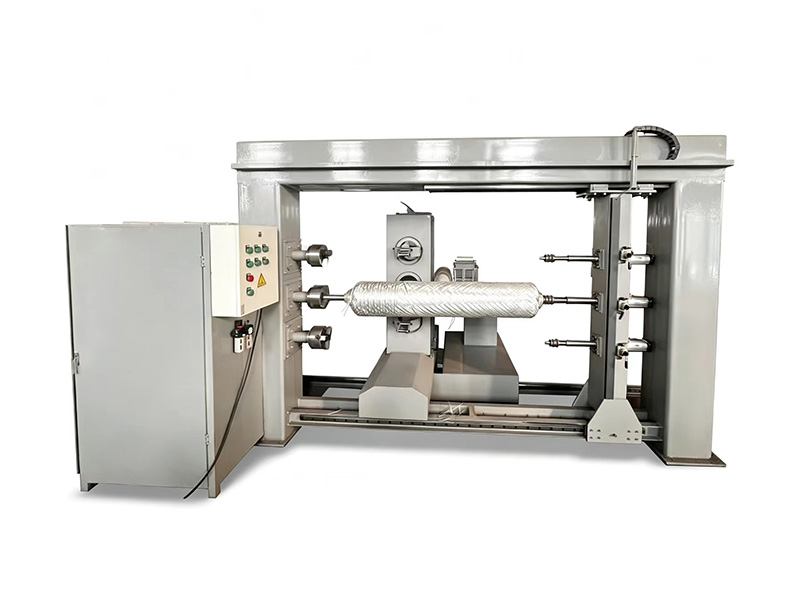
Automated 4D Winding Machine for Composites
Automated 4D winding machine for composite parts, with multi-axis fiber placement and program-controlled winding paths for repeatable batch output....
Product Overview
The 4D winding machine is used for automated filament winding of composite parts. Multi-axis interpolation handles multi-directional fiber placement and winding, so impregnated fiber builds a regular structural layer on the mandrel surface. The machine serves batch production of FRP pipes, storage tanks and various composite products, helping manufacturers improve part consistency and production efficiency.
Process Flow
Winding production mainly covers material preparation, resin impregnation, winding, curing and demolding. Fiber is impregnated with resin and led to the mandrel by the guide eye, while spindle rotation and carriage travel work together to wind layer upon layer. Winding stops once the designed number of layers is reached, the part cures on the mandrel, and it is then demolded and trimmed to finished form. Winding angle, layer count and fiber orientation are executed by the control system according to the process parameters of the product.
Multi-Directional Winding Capability
The machine can place fiber in hoop, longitudinal and diagonal directions, and combining fiber layers at different angles gives the part load-bearing capacity in several directions. For parts subject to internal pressure, bending or lateral loads, fiber angle and layer distribution can be adjusted to suit the structural design, so that strength and material use are better balanced.
Performance Features
The winding path is program-controlled and repeats consistently. The tension unit keeps fiber payout evenly tensioned, so wall thickness and fiber content stay stable. Electrical parameters can be stored and recalled, which makes changeover quick to adjust. Industrial-grade drive and control components are used throughout to suit continuous workshop production.
Applications
Parts made on this machine are widely used for chemical anti-corrosion pipes and tanks, water supply and drainage pipe, power protection conduits, environmental protection equipment housings and other composite structural parts. In actual projects, the matching mandrel and process parameters can be supplied according to the service conditions, media and load requirements of the part.
Operation and Maintenance
Before use, check that the product process parameters match the machine configuration, and after start-up run the axes empty to check every moving part. During production, watch the resin pick-up, tension and winding path. Clean the guide rails periodically, check the drive and electrical connections, and keep the resin bath and guide eye clear to extend machine service life.
FAQ and Operating Tips
When using the machine for the first time, it is advisable to complete winding trials on a small sample part and confirm the angle, layer count and tension parameters before moving to batch production. When changing to a different product size, check the mandrel dimensions, carriage stroke and guide eye position at the same time. In daily use, keep fiber and resin materials stored under proper conditions, and stop the machine for inspection promptly if lay-up deviation, abnormal noise or tension faults appear, then continue only after the problem is cleared.
Under long continuous production, standard operation and regular maintenance effectively reduce downtime from faults and keep delivery schedules on track. All moving parts should be inspected and lubricated as required by the manual, and wear parts replaced in good time.